China has really become a go-to hub for producing all kinds of hair tools—think hair dryers, straighteners, curling irons, hot brushes, and multi-stylers. What’s cool is that their advantage isn’t just about cheaper manufacturing costs. They’ve built these industrial clusters that bring together component suppliers, testing labs, packaging companies, and experienced OEM and ODM teams. This setup helps speed up the development process and makes it easier to customize products to fit different needs.
And the market tells the same story—growth is definitely still happening. According to Grand View Research, the global market for hair styling tools keeps expanding, fueled by folks doing their beauty routines at home, the rise of social commerce, and the demand for multifunctional devices. Mordor Intelligence points out that technological innovation and people spending more on grooming are also key drivers. Meanwhile, data from the International Trade Centre shows China is a major exporter of electrical appliances, though results can vary depending on the specific product category and destination.
But, don’t forget—quality still needs careful checking. A trustworthy supplier should offer traceable materials, electrical safety tests, temperature-control data, and clear info about their factory processes. It’s also smart to look for certifications relevant to your market, like CE, UKCA, FCC, or UL. Doing supplier audits, testing samples, and inspecting production lines are practical ways to avoid surprises. If you’re comparing Tools Hair suppliers, I’d suggest focusing more on their manufacturing experience, engineering skills, compliance knowledge, and after-sales support—not just how many products they have in their catalog.
Of course, the picture isn’t perfect. Some suppliers might wow you with shiny samples but struggle to keep stable quality in mass production. Others might promise quick delivery without explaining testing limits or warranty details. These issues need to be kept in mind. This overview dives into China's top Hair Tools manufacturers and suppliers, helping importers, salon distributors, and private-label brands make smarter, more informed choices.
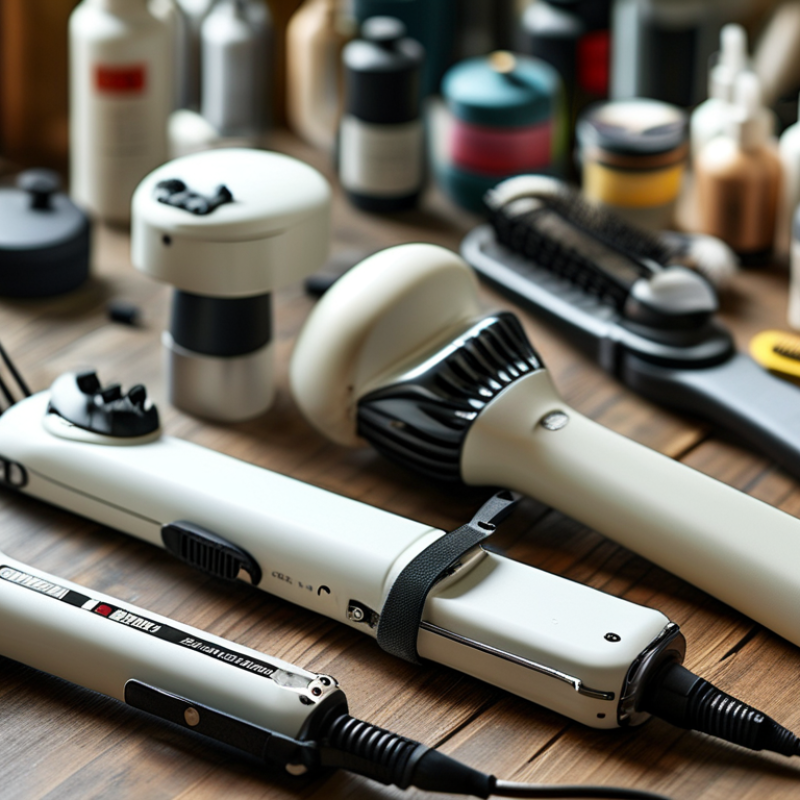
Defining Hair Tools: Product Categories, HS Codes, and China’s Supply-Chain Role
Hair Tools
cover a practical range of electrical and non-electrical products.
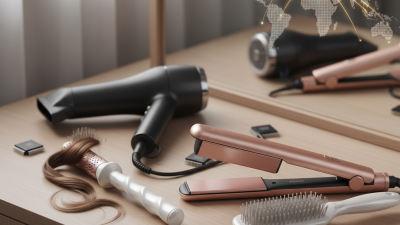
Common categories include hair dryers, straighteners, curling irons, clippers, heated brushes, combs, and salon accessories. Each category may follow a different customs classification.
The distinction matters.
Hair dryers are commonly listed under HS 8516.31. Other hair-dressing appliances may use HS 8516.32, while electric smoothing irons often fall under HS 8516.40. Hair clippers are generally associated with HS 8510.20. Non-electric brushes can fall under HS 9603.29, depending on construction and use.
These references are useful, but national tariff schedules can apply additional digits. A buyer should confirm the code with customs professionals before shipment.
China plays a major role in this supply chain through component production, assembly, tooling, packaging, and export logistics. Suppliers may source heating elements, motors, ceramic plates, switches, and molded housings from nearby industrial clusters. This shortens production cycles and supports private-label development without naming a specific brand.
Factory checks should examine insulation, plug standards, temperature stability, airflow, noise, and packaging strength. Small details affect landed cost. A catalog can oversimplify. Classification is not always tidy.
Product samples may also perform differently from mass production, so inspection records and batch testing remain important.
Market Snapshot: Hair-Styling Tools CAGR Data from Grand View Research
China Top Hair Tools Manufacturers and Suppliers
Grand View Research estimates the global hair-styling tools market reached about USD 4.9 billion in 2023. Its report projects a 5.7% CAGR from 2024 to 2030. The category includes dryers, straighteners, curling tools, and related equipment. This growth reflects daily grooming habits, online retail access, and demand for faster styling at home.
The figure matters to Chinese manufacturers and suppliers. A growing market rewards reliable heating systems, stable temperature control, and practical safety testing. Buyers often inspect ceramic plates, motor durability, cord design, and after-sales support. Small details matter. A tool that heats evenly can reduce styling time beside a busy bathroom mirror.
Hot Hair Tools
also need clear operating instructions and consistent production quality across batches.
Grand View Research provides a useful market direction, not a guaranteed sales forecast. Other industry reports may show different CAGR figures because product definitions and regional coverage vary. That limitation deserves attention. Supplier claims should be checked against test records, factory audits, warranty data, and shipment history. Sustainable materials and lower energy use are gaining interest, but their commercial effect remains uneven. I would avoid treating every growth number as certainty. Market demand can shift with consumer income, regulations, and changing beauty routines.
China’s Manufacturing Clusters: Guangdong, Zhejiang, Jiangsu, and Their Strengths
China Top Hair Tools Manufacturers and Suppliers
China’s manufacturing clusters offer different advantages for hair tool buyers. Guangdong is strong in electronics, compact motors, heating systems, and fast product assembly. Its factories often support flexible orders and quick design changes. This makes the region suitable for Travel Hair Tools, especially dual-voltage dryers, mini straighteners, and folding stylers. However, factory speed can sometimes overshadow long-term testing. Buyers should verify heat consistency, cord durability, and noise levels before placing large orders.
Zhejiang has deep experience in plastic molding, metal parts, packaging, and practical household products. This cluster can help control costs while maintaining clean, functional designs. Jiangsu is known for stronger engineering capabilities, industrial automation, and structured quality management. Some suppliers provide better testing records and more stable production processes. Still, a famous manufacturing area is not proof of factory reliability. I have seen attractive samples fail during repeated temperature and drop tests. That lesson remains important.
Tips: Request production samples from each cluster. Test them for heating time, grip comfort, airflow, and surface temperature. Ask for material details, inspection reports, and clear defect standards. Compare the actual factory with the trading office. A video call is useful, but an independent audit is stronger. Also review packaging closely; crushed corners can reveal weak handling controls. Expect small problems, and document them early.
Manufacturer Verification: ISO 9001, BSCI Audits, Factory Capacity, and MOQ
China Top Hair Tools Manufacturers and Suppliers
Verifying a hair tools manufacturer requires more than reviewing a polished catalog. I check the ISO 9001 certificate, issuing body, validity dates, and covered production sites. A valid certificate indicates controlled processes, but it does not prove every shipment is consistent. Factory records matter.
BSCI audit reports can reveal working conditions, wage practices, safety controls, and corrective actions. I prefer recent reports with clear site information. An audit is only a snapshot. Follow-up evidence is essential. During a factory visit, inspect assembly lines, aging-test stations, packaging areas, and maintenance logs. Ask whether the same staff and equipment support export orders.
Capacity claims need practical calculation.
Compare monthly output with machine numbers, shift patterns, worker counts, and current orders. A factory stating 100,000 units monthly may rely on overtime or subcontracting. That deserves closer review. Request production samples from different batches, not one carefully selected unit.
MOQ affects more than price. Confirm whether it applies per model, color, voltage, or packaging design. Smaller MOQs may increase unit costs or limit customization. Larger orders can strain quality control when planning is weak. I have seen attractive quotations hide separate charges for molds, testing, cartons, and spare parts. Clear written terms reduce surprises, although no verification process is perfect.
Product Benchmarking: Wattage, Heat-Up Time, Temperature Accuracy, and Lifespan
China Top Hair Tools Manufacturers and Suppliers
When evaluating Hair Styling Tools, wattage is only a starting point. Higher wattage can shorten heating time, but it may also increase surface temperature swings. In supplier audits, I compare rated power with actual energy use during operation. A 45-second heat-up time is useful, yet stable heating matters more for daily styling.
Temperature accuracy requires more than reading the display. I use a calibrated probe across several points on the heated plate. A tool showing 200°C may actually range from 190°C to 208°C. That difference can affect fine or chemically treated hair. Testing should include repeated measurements, different voltage conditions, and a five-minute idle period. Small details matter.
Lifespan testing reveals manufacturing consistency. I prefer cycle tests with repeated heating, cooling, cord movement, and button use. Ceramic surfaces should remain even after extended handling. Hinges should not loosen after thousands of openings. Some suppliers provide impressive laboratory figures, but field results can differ. I have seen early samples perform better than later batches, which deserves careful review. No test is perfect. A transparent supplier should share failure rates, repair procedures, and replacement-part availability. That information often says more than a glossy specification sheet.
Safety Compliance: IEC 60335-2-23, CE, RoHS, FCC, and UKCA Requirements
China Top Hair Tools Manufacturers and Suppliers
Safety Compliance: IEC 60335-2-23, CE, RoHS, FCC, and UKCA Requirements
Reliable hair tool suppliers treat safety compliance as an engineering process, not a label attached before shipment. IEC 60335-2-23 covers household appliances for skin and hair care, alongside the general requirements of IEC 60335-1. Testing should examine insulation, leakage current, abnormal operation, temperature rise, and resistance to moisture. A professional manufacturer also checks heating elements, switches, plugs, and cable strain relief during production. Small details matter. A loose connector can create excessive heat.
CE requirements usually involve applicable European safety, electromagnetic compatibility, and environmental rules. RoHS controls restricted substances in electrical products. FCC requirements focus mainly on electromagnetic emissions in the United States. UKCA may apply when products enter the Great Britain market. Suppliers should provide test reports, declarations, technical files, and traceable component records. Documents must match the exact model, not a similar sample. This is where some factory programs remain weak. Paperwork may look complete while design changes go unrecorded. Responsible teams review compliance after every circuit, material, or enclosure change. They also keep production samples for independent verification. Certification is never a substitute for careful inspection.
Supplier Selection: China Customs HS 851631/851632 Data, Costs, Lead Times, and Warranty
China Top Hair Tools Manufacturers and Suppliers
When evaluating Chinese hair tool suppliers, start with China Customs HS data under 851631 and 851632. HS 851631 generally covers hair dryers, while 851632 covers other hairdressing apparatus. Treat these codes as screening references, not automatic classification. Confirm the product structure with a qualified customs broker before calculating duties. A reliable supplier should provide commercial invoices, packing details, test reports, and consistent product specifications.
Request costs on an EXW, FOB, or DDP basis, because each term changes your landed budget. Compare motor type, heating elements, packaging, tooling, inspection, freight, and spare parts separately. Standard production may take 15–30 days after approval, while custom colors or molds can extend lead times. Ask for a written production schedule. Delays happen. A low quotation can hide weak packaging or expensive warranty replacements. Require a 12–24 month warranty, clear defect definitions, repair procedures, replacement-part availability, and a response time for claims. These details reveal operational maturity better than a polished catalog.
Tips: Check at least three suppliers using the same HS description and test requirements. Request a sample from the actual production line. Measure airflow, temperature stability, noise, plug configuration, and surface heating. Keep dated photos and inspection records. I would not rely on a sample alone; mass production can drift. Recheck the first shipment before scaling orders.
China Top Hair Tools Manufacturers and Suppliers - Supplier Selection: China Customs HS 851631/851632 Data, Costs, Lead Times, and Warranty
Supplier-selection benchmark for China-made hair-drying and electro-thermic hair-dressing equipment
| HS Code |
Product Category |
Typical Export Specification |
Indicative FOB China Price
(USD/Unit) |
Typical MOQ |
Sample Lead Time |
Mass-Production Lead Time |
Standard Warranty |
Key Selection Criteria |
| 851631 |
Compact travel hair dryer |
1,000–1,600 W; folding handle; dual-voltage options; concentrator nozzle |
$3.20–$8.50 |
500–1,000 units |
7–12 days |
25–40 days |
12 months |
Electrical safety, folding-hinge durability, plug configuration, noise level |
| 851631 |
Ionic or ceramic hair dryer |
1,600–2,200 W; ionic generator; ceramic or tourmaline heating element; 2–3 heat settings |
$7.50–$18.00 |
500–1,000 units |
7–15 days |
30–45 days |
12–24 months |
Thermal cut-off, motor endurance, EMC performance, airflow consistency |
| 851631 |
Professional salon hair dryer |
1,800–2,400 W; AC or high-speed DC motor; cool-shot button; removable filter |
$14.00–$38.00 |
300–800 units |
10–18 days |
35–55 days |
12–24 months |
Motor life, continuous-operation test, replacement parts, repair procedure |
| 851632 |
Hair straightener |
Ceramic plates; 160–230°C; PTC or MCH heater; optional adjustable temperature |
$4.50–$14.00 |
500–1,000 units |
7–15 days |
25–45 days |
12 months |
Plate temperature uniformity, insulation, auto shut-off, cord swivel |
| 851632 |
Hair curling iron or wand |
16–32 mm barrel; 120–210°C; ceramic, titanium, or coated heating surface |
$5.00–$16.00 |
500–1,000 units |
7–15 days |
25–45 days |
12 months |
Temperature recovery, cool tip, stand stability, burn-risk controls |
| 851632 |
Hot air brush |
600–1,200 W; heated airflow; interchangeable brush heads; cool-air setting |
$8.00–$22.00 |
500–1,000 units |
10–18 days |
30–50 days |
12 months |
Air inlet protection, heater insulation, attachment fit, hair-entanglement prevention |
| 851632 |
Multi-styler hair tool |
Multiple heated or airflow attachments; digital temperature control; travel or salon format |
$12.00–$35.00 |
300–800 units |
12–20 days |
35–60 days |
12–24 months |
Attachment reliability, software or control-board stability, thermal protection, spare-part availability |
China Customs and Import-Planning Data Fields
| Data Dimension |
HS 851631 |
HS 851632 |
Supplier-Selection Use |
| Official HS description |
Hair-dryers |
Other electro-thermic hair-dressing apparatus |
Confirm classification before quotation, declaration, and import filing |
| Customs value basis |
Export value normally reported in USD; transaction value may be affected by Incoterms and freight treatment |
Export value normally reported in USD; transaction value may be affected by Incoterms and freight treatment |
Compare suppliers using the same Incoterm, voltage, packaging, and accessory configuration |
| Unit-value calculation |
Declared export value ÷ declared quantity |
Declared export value ÷ declared quantity |
Use as a screening benchmark, not as a substitute for a product-level quotation |
| Main documentation |
Commercial invoice, packing list, bill of lading or air waybill, export declaration, test documents where required |
Commercial invoice, packing list, bill of lading or air waybill, export declaration, test documents where required |
Require document consistency across invoice, carton marks, product label, and declaration |
| Compliance checkpoint |
Voltage, plug, insulation, temperature rise, EMC, RoHS or destination-market requirements |
Voltage, plug, insulation, temperature rise, EMC, RoHS or destination-market requirements |
Obtain destination-market certification evidence before mass production |
Cost and Risk Checklist
| Cost Item |
Typical Planning Range |
Recommended Control |
| Private-label packaging and artwork |
$0.15–$1.20 per unit, excluding tooling |
Approve packaging dielines, carton drop-test samples, and barcode placement before production |
| Custom mold or structural modification |
Quoted separately; depends on material, size, and tooling complexity |
Confirm tooling ownership, maintenance responsibility, and refund terms in writing |
| Pre-shipment inspection |
Commonly budgeted at approximately $250–$450 per inspection day |
Use an approved sampling plan and test a representative quantity from finished cartons |
| Warranty reserve |
Plan 1%–3% of product value until field-return data is available |
Define replacement, refund, spare-parts, and freight-liability procedures in the purchase contract |
Data note:
FOB prices, MOQs, lead times, and warranty periods are transparent planning benchmarks compiled for standard China sourcing scenarios. Actual quotations vary by specification, order quantity, certification, packaging, season, and Incoterms. HS 851631 and HS 851632 classification should be confirmed with the customs authority or licensed customs broker in the destination market before shipment.
Reference framework: Harmonized System heading 8516, China Customs declaration principles, supplier quotations, and standard international procurement practices. Customs statistics should be checked against the latest official release for the relevant reporting period.
Grand View Research 2025 Insights: KooFex’s 110,000 RPM BLDC Professional Hair Dryer for Salons
Grand View Research’s 2025 market outlook indicates that the global hair-dryer industry is positioned for steady growth, with forecasts commonly placing its compound annual growth rate at approximately 5–6% through 2030. This expansion reflects rising demand for professional-grade tools that improve styling efficiency, reduce service time, and support better energy management in salons. Within this market, high-speed BLDC technology is gaining attention because it combines compact motor design, responsive performance, and longer operational durability than many conventional motor systems.
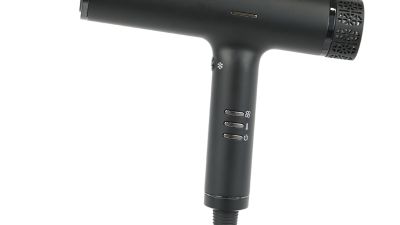
A professional hair dryer operating at up to 110,000 RPM is designed for fast airflow generation and precise styling control, making it suitable for busy salon environments where turnaround time matters. Its BLDC motor architecture can also help deliver smoother operation and reduced brush wear, while adjustable heat and airflow settings support different hair textures and styling techniques. Industry equipment reports further identify lightweight construction, lower operating noise, and thermal consistency as important purchasing factors for salon professionals seeking reliable tools for repeated daily use.
FAQS
: Check the ISO 9001 certificate, issuing body, validity dates, and covered factory locations. A certificate helps, but it proves nothing about every shipment.
Review recent audit reports covering wages, safety controls, working conditions, and corrective actions. Look for clear factory details. An audit is only a snapshot.
Inspect assembly lines, aging-test stations, packaging areas, and maintenance records. Ask whether export orders use the same workers and equipment.
Compare claimed output with machine numbers, shifts, worker counts, and current orders. A monthly figure may depend on overtime or subcontracting.
Yes, request samples from different batches instead of one selected unit. Check heating performance, assembly quality, packaging, and visible defects.
Confirm whether the minimum applies per model, color, voltage, or packaging design. Small orders may raise unit costs. Large orders can expose weak quality controls.
Request relevant test reports, declarations, technical files, and traceable component records. Documents should match the exact model, not a similar product.
Testing should examine insulation, leakage current, abnormal operation, temperature rise, and moisture resistance. Inspect heating elements, switches, plugs, and cable strain relief.
Review compliance after every circuit, material, or enclosure change. Keep production samples for possible independent verification. Paperwork can fall behind reality.
Conclusion
This guide explains the main Hair Tools categories, including hair dryers, styling irons, curling devices, and related electrical products, together with their relevant HS code classifications. It reviews China’s important manufacturing clusters in Guangdong, Zhejiang, and Jiangsu, highlighting their different strengths in component sourcing, product engineering, assembly capacity, and export support. The market overview also considers current growth trends and demand for efficient, reliable styling equipment.
For buyers, the article presents a practical supplier-evaluation framework covering ISO 9001 systems, BSCI audits, production capacity, MOQ, costs, lead times, and warranty policies. It also recommends benchmarking wattage, heat-up speed, temperature accuracy, durability, and user safety. Compliance considerations include IEC 60335-2-23, CE, RoHS, FCC, and UKCA requirements, while China Customs data under HS 851631 and 851632 can support supplier comparisons and purchasing decisions.